



Protect your incisions.
Support for mothers.
Leave nothing to chance
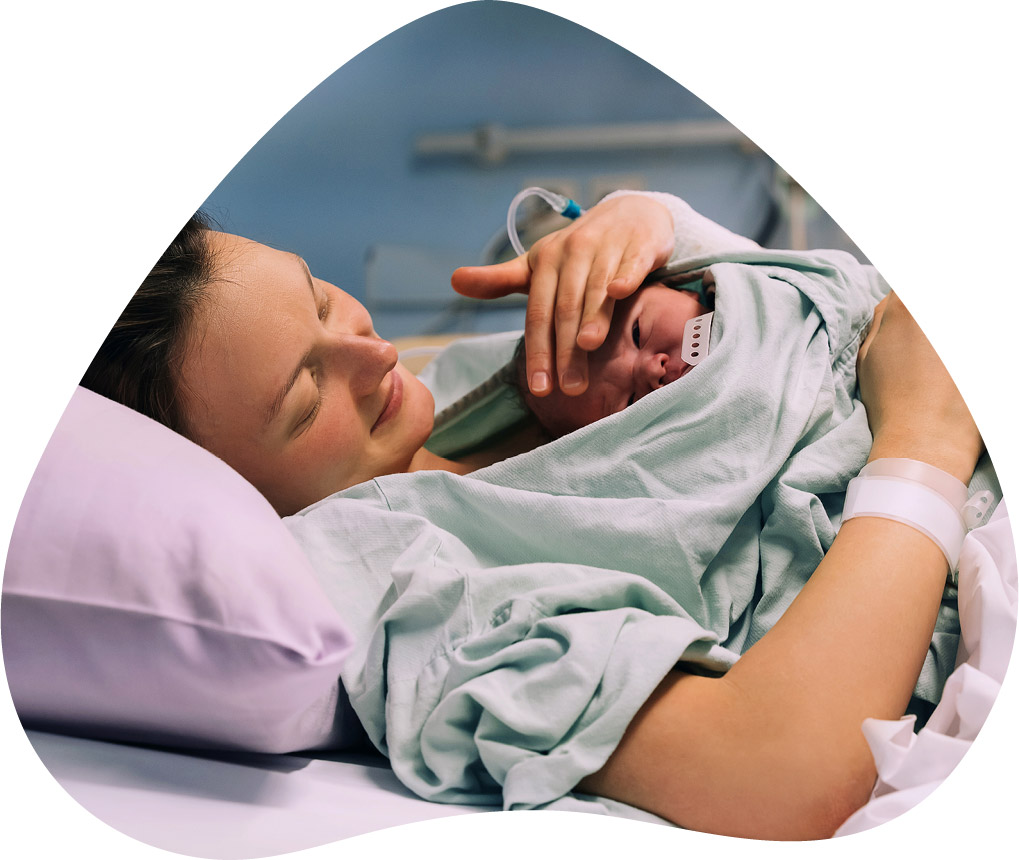
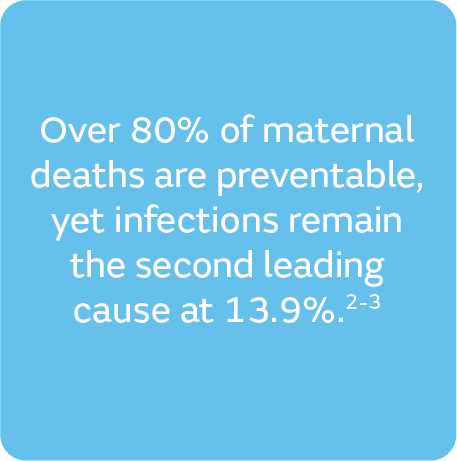
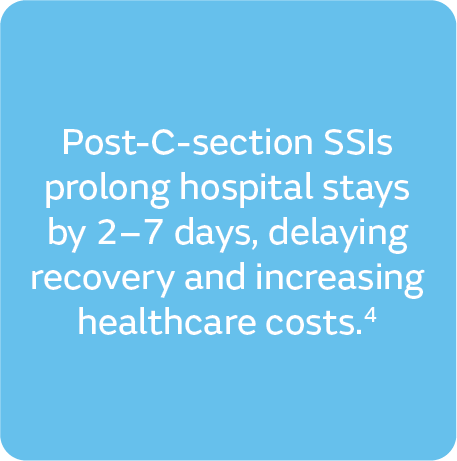
Bringing new life into the world shouldn’t be clouded by complications. Yet, for many mothers, surgical site infections (SSIs) after C-sections delay recovery, prolong hospital stays, and increase risks.
PICO sNPWT Active Incision Management can help reduce the risk of SSIs.7 Mothers deserve the best start. Leave nothing to chance.
The Impact of SSIs in C-Section Recovery
SSIs after C-sections can mean longer hospital stays, delayed recovery, and added stress for new mothers. Why wait to treat complications when you can help prevent them? PICO sNPWT Active Incision Management is designed to help give mothers a confident start to recovery—so they can focus on what matters most.
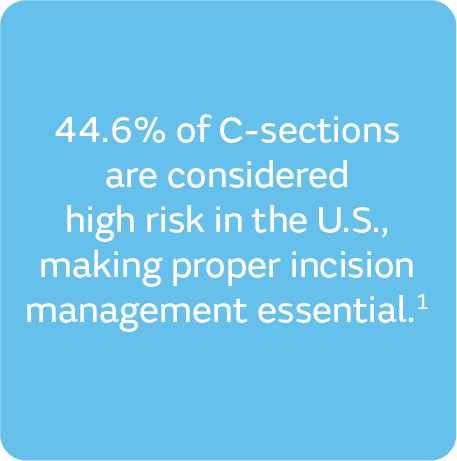


Study of 10,000+ C-sections shows PICO sNPWT reduces complications, assists mother-baby bonding, and cuts healthcare costs by $728,000 per 1,000 patients11
Discover PICO active incision management
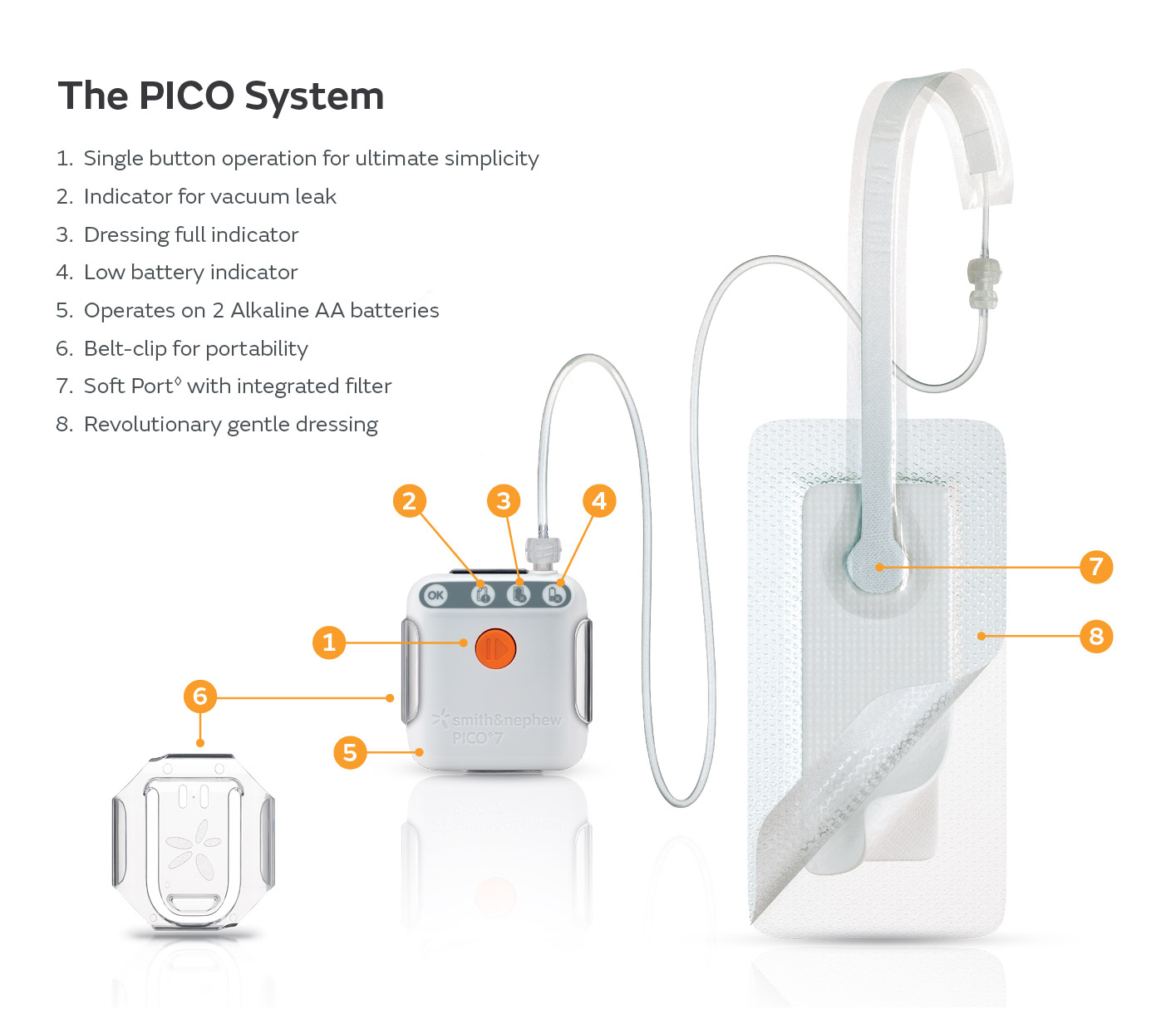
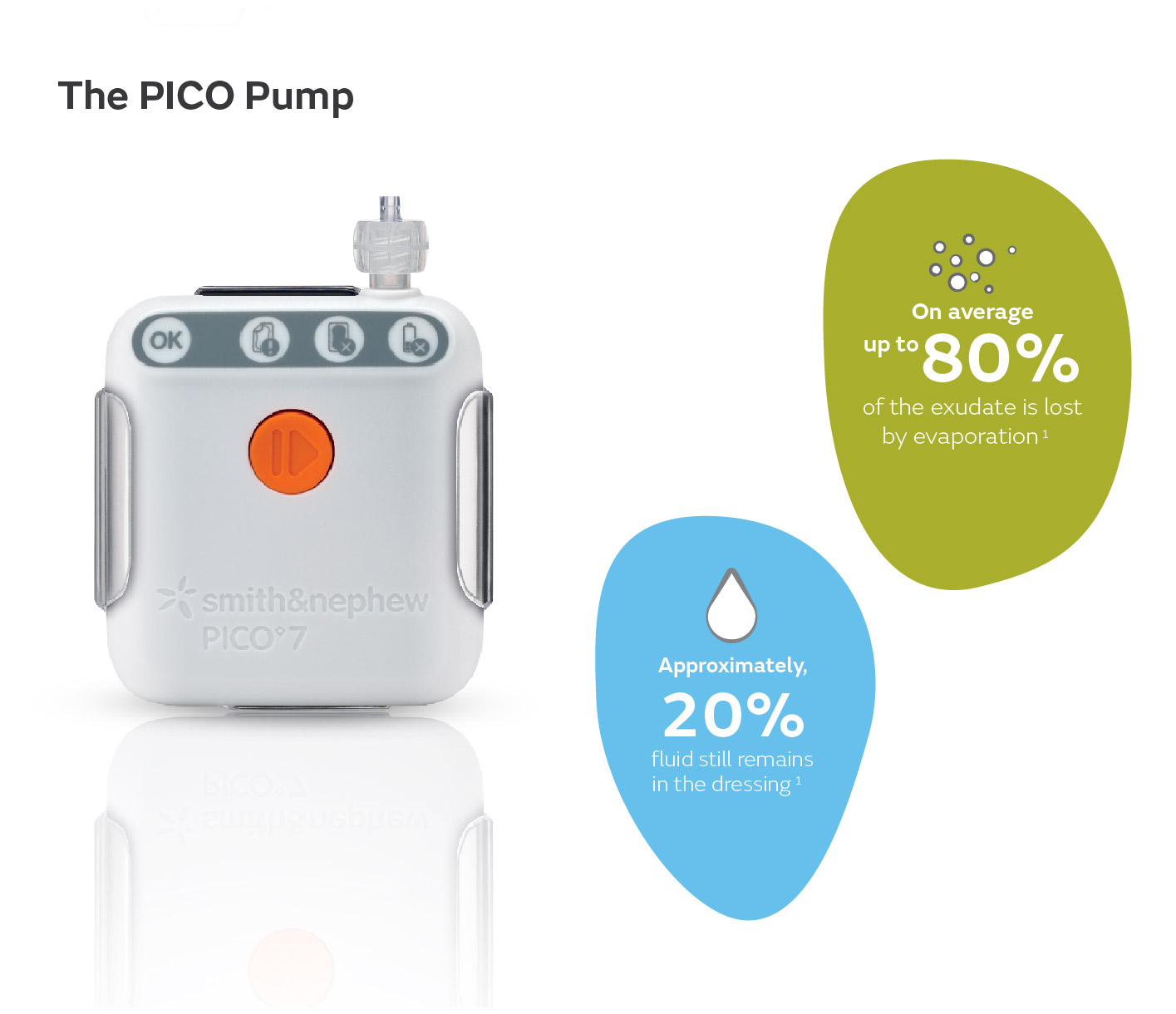
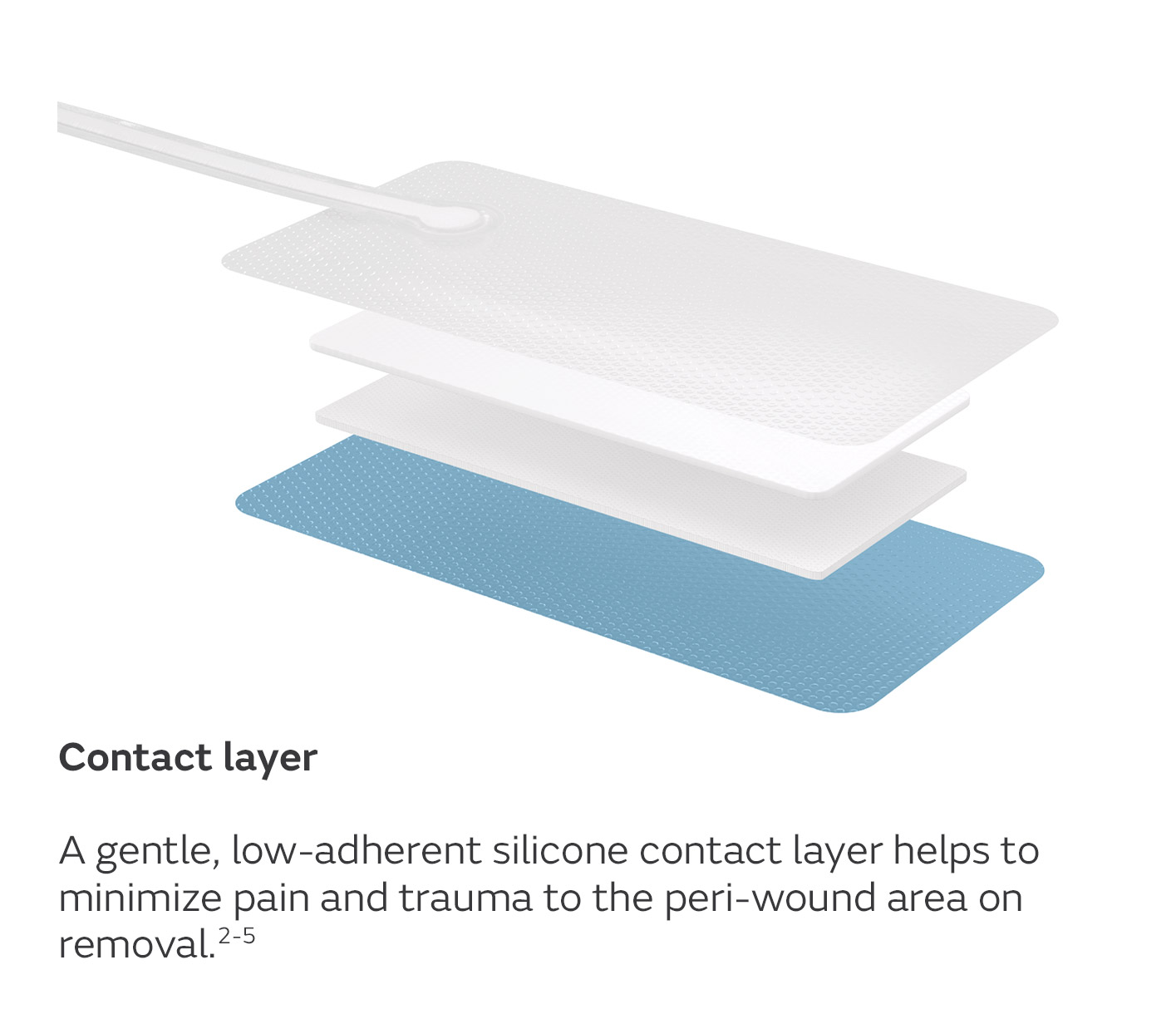
Mothers deserve a recovery that’s safe, comfortable, and complication-free. PICO Advanced Incision Management is a gentle, low-profile solution with a soft silicone dressing and pocket-sized pump.
The PICO System helps promote tissue moisture movement,6 helps reduce the incidence of SSIs,7 and supports incision closure.6 Waterproof and portable,8 the PICO System helps protects every mother’s recovery—without disrupting the moments that matter most.
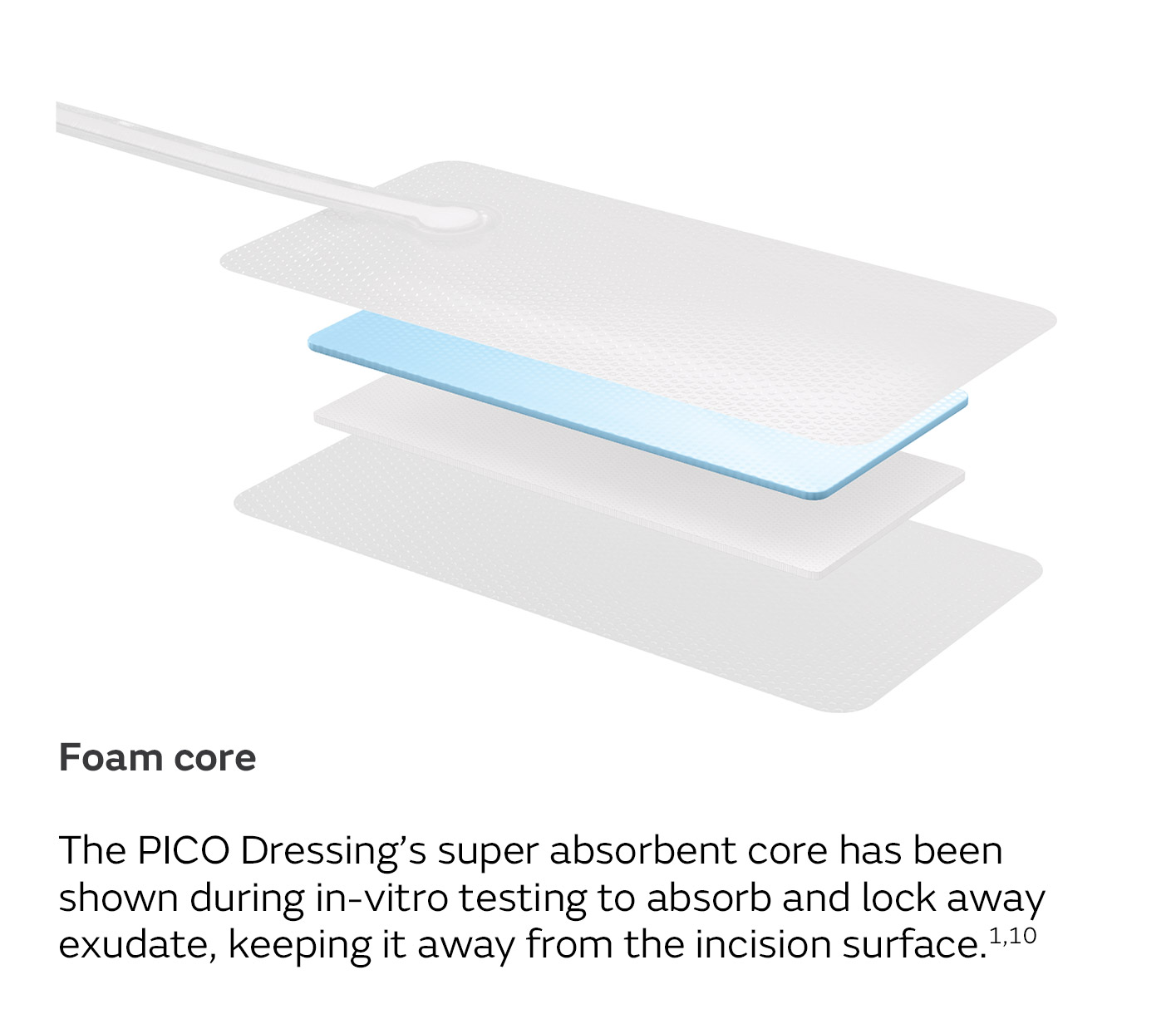
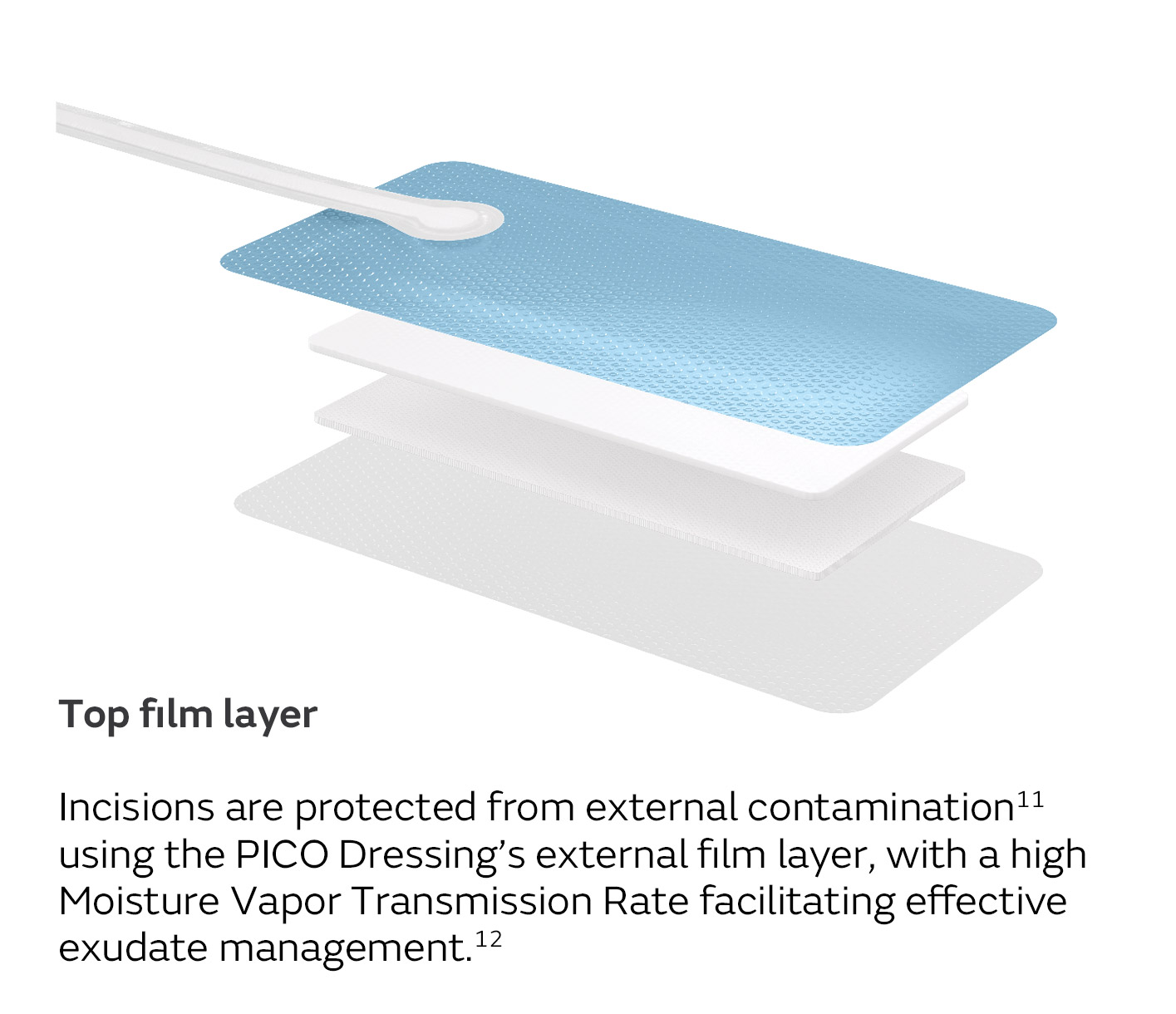
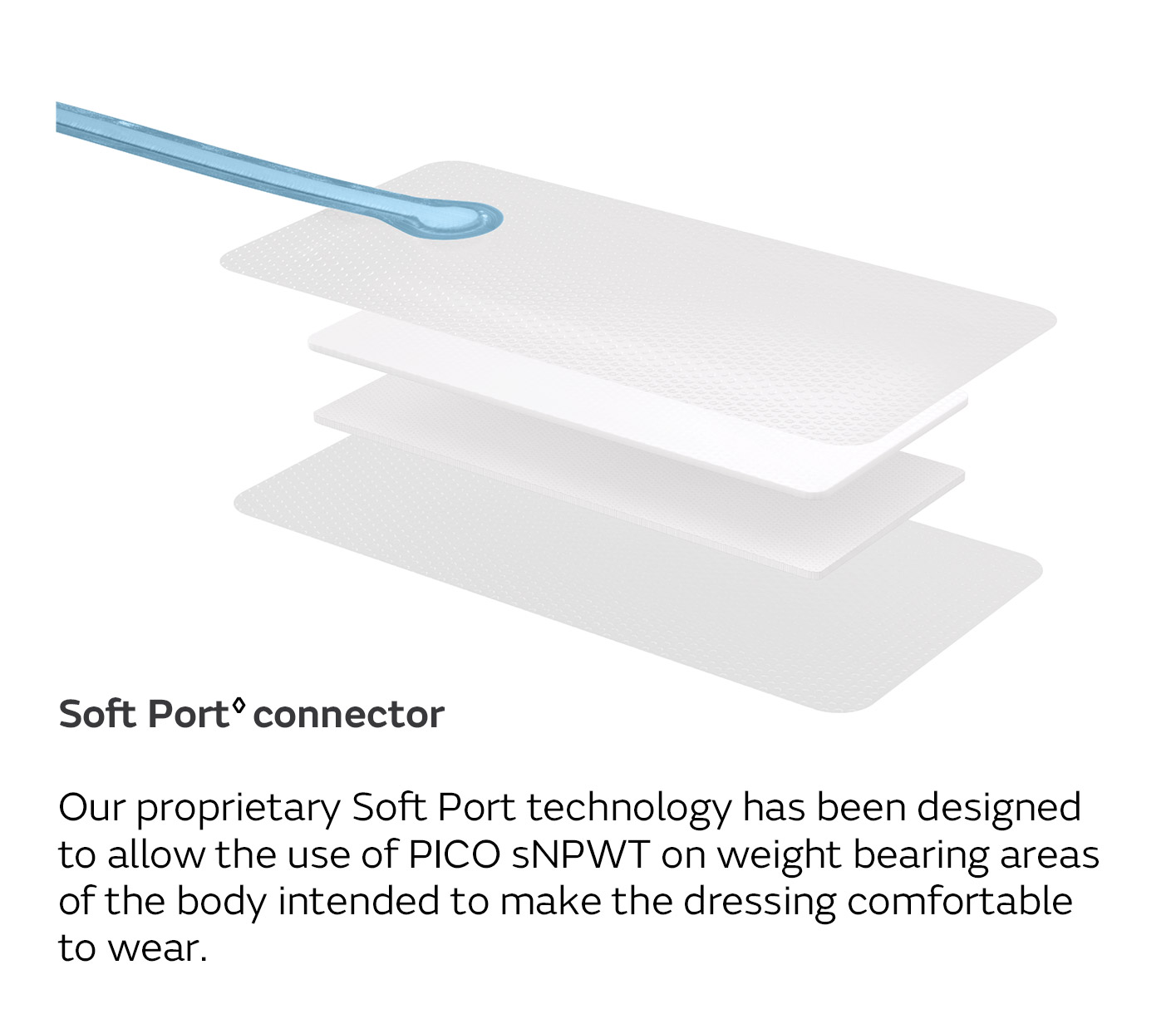
The PICO System's mode of action
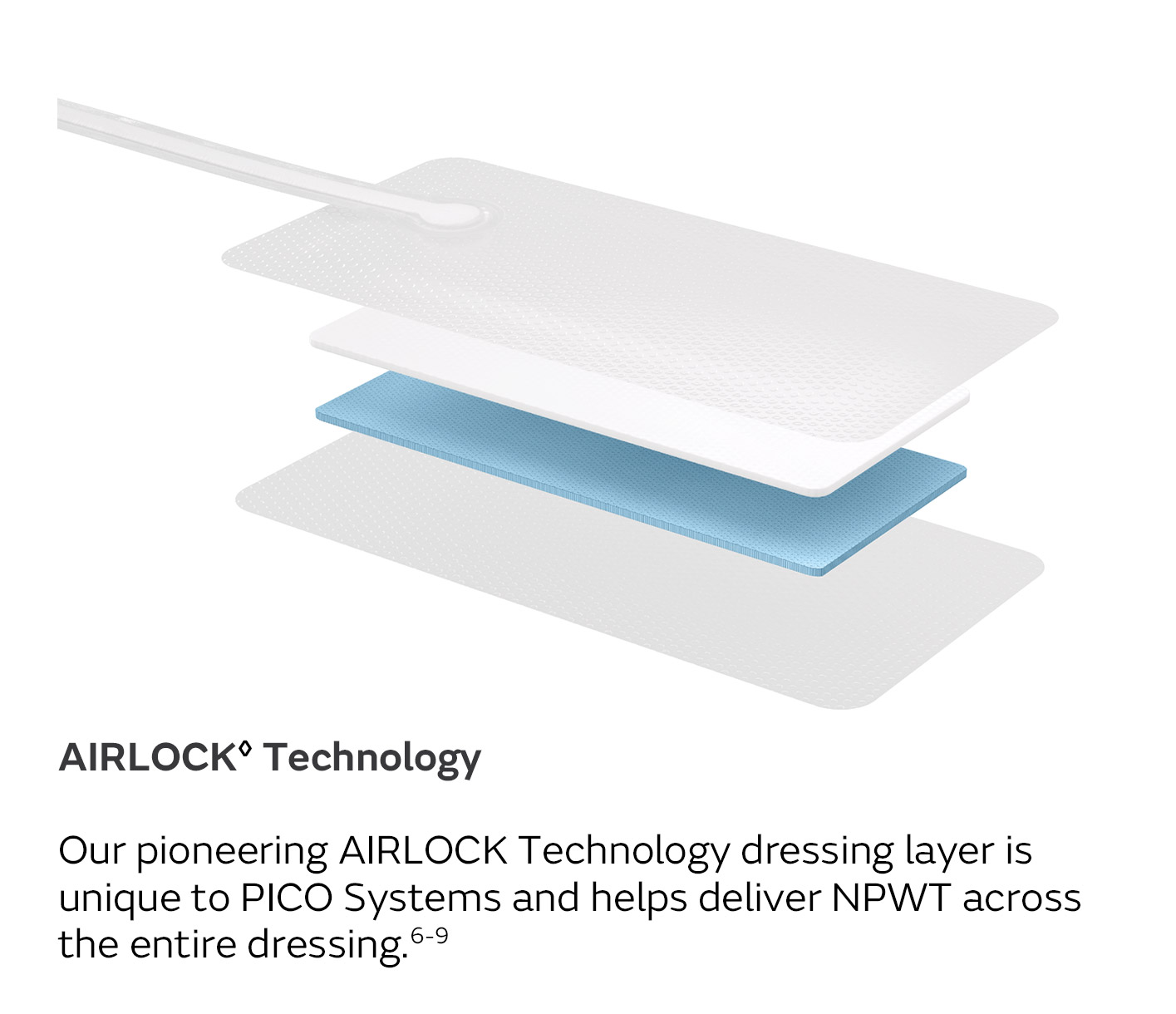
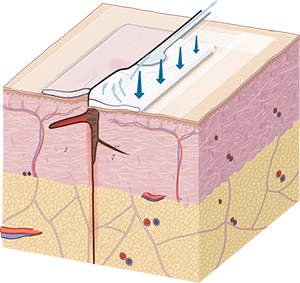
PICO Active Incision Management delivers continuous negative pressure across the entire incision,9 helping to:
Helps protect from contamination
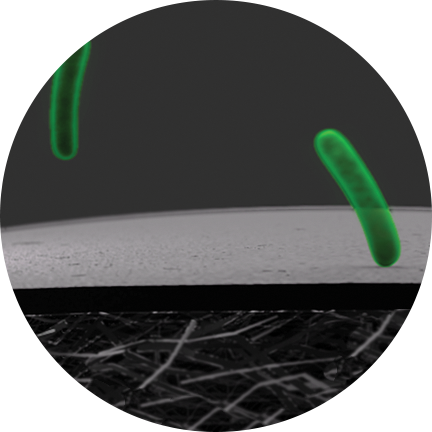
PICO sNPWT pro-actively clears the path to help provide optimal conditions for a pro-healing environment, by helping to physically disrupt the biofilm,*2 by removing excess fluid and so helping to reduce inflammation.**3,16-19
Improved quality and appearance of scars
PICO System has been shown to significantly improve the quality and appearance of scars when applied post-operatively.*11
*Compared to care with standard dressings; p0.001
Promotes lymphatic drainage
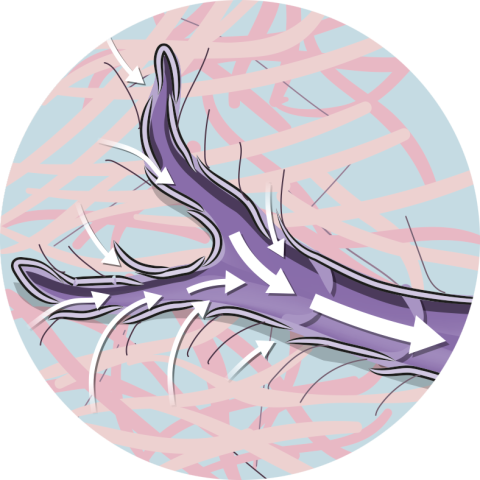
Helps to promote lymphatic drainage*4
*As demonstrated in vivo.
Improves blood flow
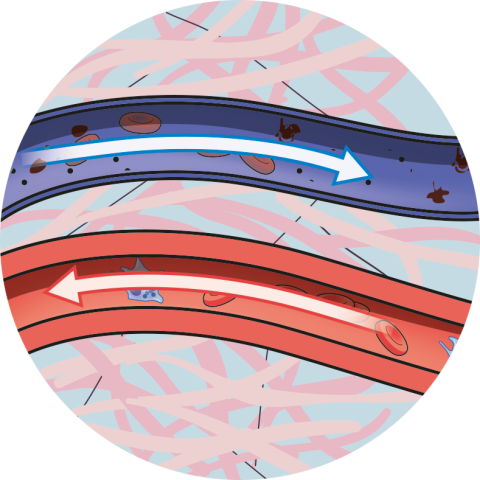
Maintains an efficient blood supply to the wound (perfusion), which helps to support immune response.5-7
Moist wound environment

Provides a moist environment which helps with healing.12-15
Holds incision together
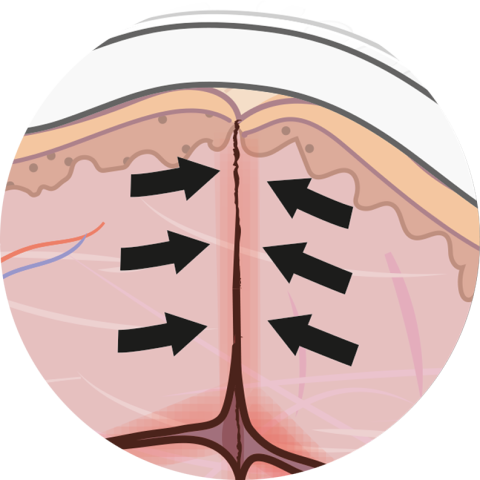
Holds closed incision together, reducing lateral tension forces across the incision.†1
†As demonstrated in biomechanical modeling.
Helps reduce edema
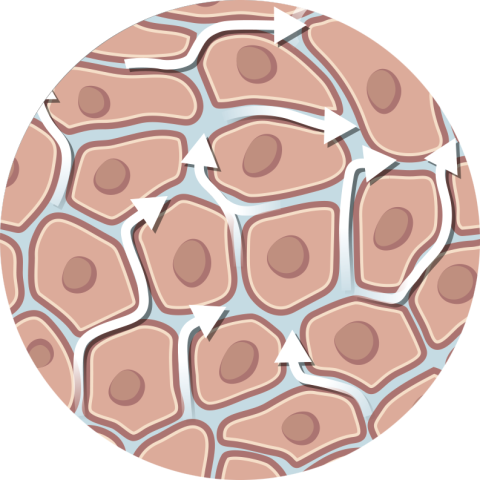
Increase the efficiency of functional lymph vessels which helps to reduce fluid buildup.8-10
Clinical evidence
PICO sNPWT Active Incision Management delivers an advanced recovery solution for high-risk C-section patients with strong clinical evidence:

Helps reduce the incidence of SSIs by 51%
The PICO System helps reduce post-C-section SSI risk by 51%, helping high-risk mothers avoid infections that delay healing and bonding time with their babies.7

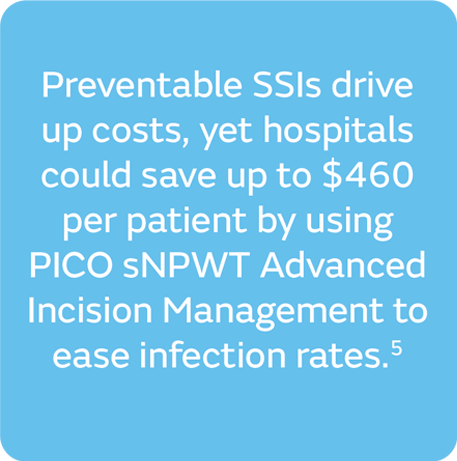
Hospitals can save up to $460 per patient7
Estimated costs per patient in women with pre-pregnancy BMI ≥35kg/m2 were lower with PICO Active Incision Management than with standard dressings.7
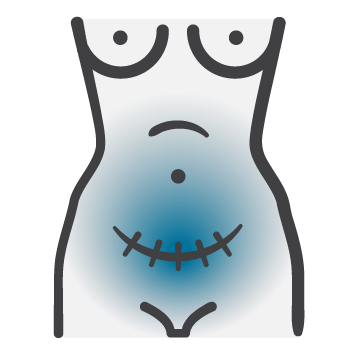
Improved scar appearance
Patients were more satisfied with the appearance of their scars 12 months after a C-Section with PICO Active Incision Management, compared to those using standard dressings.7
See what Kristi experienced with the PICO Dressing.
Why are surgeons using sNPWT?
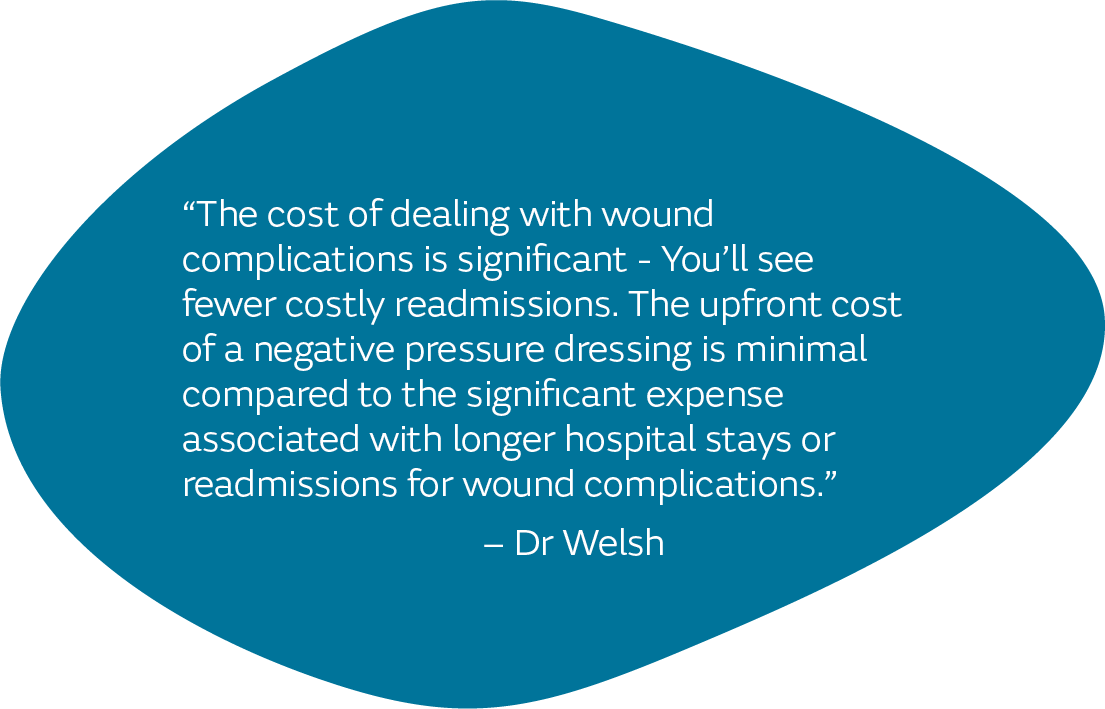
See what Dr. Welsh, one of the authors of the new study on sNPWT for cesarean sections, has to say about the PICO System.

Mode of Action references
* The PICO Single Use Negative Pressure Wound Therapy System (sNPWT) functions through a physical mode of action. All therapeutic effects described—such as reduction of biofilm, fluid removal, stimulation of lymphatic flow, and activation of cellular responses (e.g., fibroblast migration or angiogenesis)—are mechanically induced through the application of uniform negative pressure and compressive forces. These effects are not the result of biological, chemical, or pharmacological interactions, and should not be interpreted as such. This information is intended to support understanding of the physical mechanisms by which PICO may contribute to an optimal wound healing environment.
**Achieved by removing exudate containing inflammatory markers
- Loveluck J, et al. ePlasty. 2016;16:183-195.
- Smith+Nephew 2024. Assessment of the Effect of the PICO◊ 7 Single Use Negative Pressure Wound Therapy System and Conventional Dressings Pre-Established Biofilms in vitro Using a Wound Surface Biofilm Model. Report : AWM.24.065.
- Smith & Nephew 2019. PICO Biomechanical Study. Internal Report. DS/19/211/R
- Kilpadi DV, et al. Wound Repair Regen. 2011;19(5):588-596.
- Malmsjö M, et al. ePlasty. 2014;14:1-15.
- Ma Z, et al. Exp Ther Med. 2016;11(4):1307-1317.
- Xia CY, et al. Mol Med Rep. 2014;9(5):1749-1754.
- Smith+Nephew 2019. Internal Report. EO.AWM.PCSgen.001.v2.
- Birke-Sorensen H, et al.. Journal of plastic, reconstructive and aesthetic surgery: JPRAS 64 Suppl, S1–S16 (2011)
- Scalise A, et al. Int Wound J. 2016;13:1260–1281.
- Shim HS, et al. Biomed Res Int. 2018;2018
- R. G, R. D, J. S, et al. The effects of a single use canister-free Negative Pressure Wound Therapy (NPWT) System* on the prevention of post surgical wound complications in patients undergoing bilateral breast reduction surgery. Paperpresented at: The British Association of Aesthetic Plastic Surgeons (BAAP’s) 30th Annual Scientific Meeting; 2014; London.
- Saxena V, et al. Plast Reconstr Surg. 114:1086–96.
- Borquist O, et al. Annals of Plastic Surgery. 64: 789–93.
- Ichioka S, et al. Wound Rep Regen. 16(3); 460–465.
- Smith+Nephew 2021.PICO™ Pressure Mapping Study. Internal Report. DS/19/211/R - Part B.
- Scalise A, Calamita R, Tartaglione C, et al. Improving wound healing and preventing surgical site complications of closed surgical incisions: a possible role of Incisional Negative Pressure Wound Therapy. A systematic review of the literature. Int Wound J. 2016;13:1260–1281
- Birke-Sorensen H, et al. Evidence-based recommendations for Negative Pressure Wound Therapy: Treatment variables (pressure levels, wound filler and contact layer) - Steps towards an international consensus. Journal of plastic, reconstructive and aesthetic surgery: JPRAS 64 Suppl, S1–S16 (2011).
- WUWHS Consensus document Wound Exudate effective assessment and management; 2019.
General references
- Barber, Emma L. “Contributions to Rising Cesarean Delivery Rate.” American College of Obstetricians and Gynecologists, vol. 118, no. 1, July 2011, pp. 29-38.
- https://www.cdc.gov/reproductivehealth/maternal-mortality/erase-mm/data-mmrc.html#table6.
- https://www.cdc.gov/reproductivehealth/maternal-mortality/pregnancy-mortality-surveillance-system.htm#causes.
- Jenks PJ, Laurent M, McQuarry S, Watkins R. Clinical and economic burden of surgical site infection (SSI) and predicted financial consequences of elimination of SSI from an English hospital. Journal of Hospital Infection. 2014 Jan 1;86(1):24-33.
- Hyldig N, Joergensen JS, Wu C, Bille C, Vinter CA, Sorensen JA, Mogensen O, Lamont RF, Moller S, Kruse M. Cost-effectiveness of incisional negative pressure wound therapy compared with standard care after caesarean section in obese women: a trial-based economic evaluation. BJOG: An International Journal of Obstetrics & Gynaecology. 2019 Apr;126(5):619-27.
- Brownhill et al., 2023. sNPWT versus conventional dressings for the reduction of surgical wound dehiscence (SWD): In vitro and clinical data, Poster EWMA 2023.
- Hyldig N, Vinter CA, Kruse M, Mogensen O, Bille C, Sorensen JA, Lamont RF, Wu C, Heidemann LN, Ibsen MH, Laursen JB. Prophylactic incisional negative pressure wound therapy reduces the risk of surgical site infection after caesarean section in obese women: a pragmatic randomised clinical trial. BJOG: An International Journal of Obstetrics & Gynaecology. 2019 Apr;126(5):628-35.
- Hudson DA, Adams KG, Van Huyssteen A, Martin R, Huddleston EM. Simplified negative pressure wound therapy: clinical evaluation of an ultraportable, no-canister system. Int Wound J. 2015 Apr;12(2):195-201.
- Smith & Nephew 2019. PICO Biochemical Study. Internal Report. DS/19/211/R.
- Hyldig N, Moller S, Joergensen JS, Bille C. Ann Plast Surg. 2020;85(6):e59–e65.
- Vilkins A, Nherera L, Searle R, Welsh T. Prophylactic negative pressure wound therapy for cesarean section: a realworld evidence study. Wounds. 2025;37(4):152–157.
- Harris J, Spitzer M. A Collaborative Quality Improvement Project to Reduce Surgical Site Infection in Cesarean Delivery. Womens Health Rep (New Rochelle). 2024 Sep 6;5(1):632-640.