



Among females, breast cancer is the most commonly diagnosed cancer and the leading cause of cancer death.1
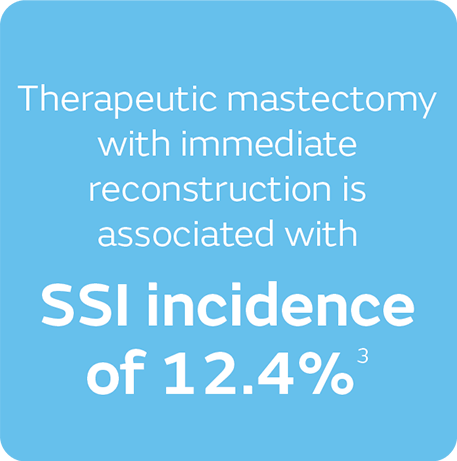
Therapeutic mastectomy with immediate reconstruction is a common treatment option for women diagnosed with breast cancer.2



Reduction mammoplasty is a common procedure with over 55,000 performed in the US alone in 2020.1

Breast procedures
Application tips
- Exudation: low/moderate
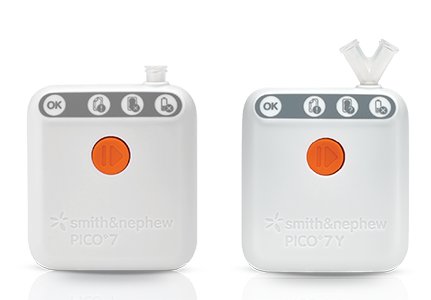
- More than 1 PICO System may be used if there is more than 1 incision. The PICO 7Y System, which treats two incisions may be used. (1 pump connected to 2 dressings)
- PICO System may be used in conjunction with surgical drains provided the dressing is not placed over tubing where it exits the skin. The silicon boarder may be trimmed if needed for drain placement.
- Remove excess hair and use NO STING SKIN-PREP◊ Skin Protectant if needed
- Port position: uppermost from incision
- In areas of complexity, fixation strips or gel strips* (*not included in kit) may be used to maintain a seal
- Dressing may be left in place up to 7 days
- The PICO 7Y System can be used in conjunction with adjuvant Pressure Garment Therapy (PGT), such as hosiery or elastic garments following surgery (including breast surgery)
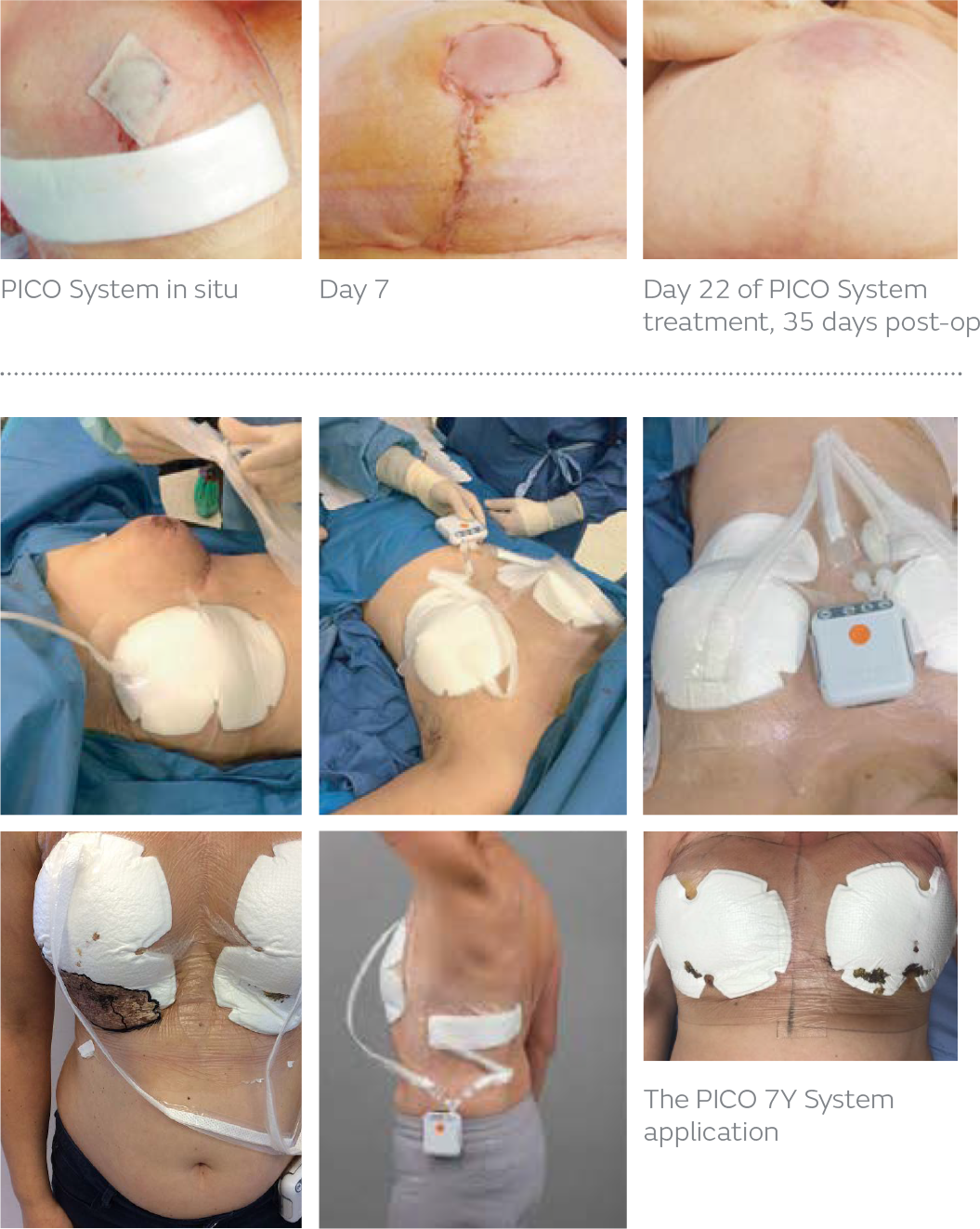
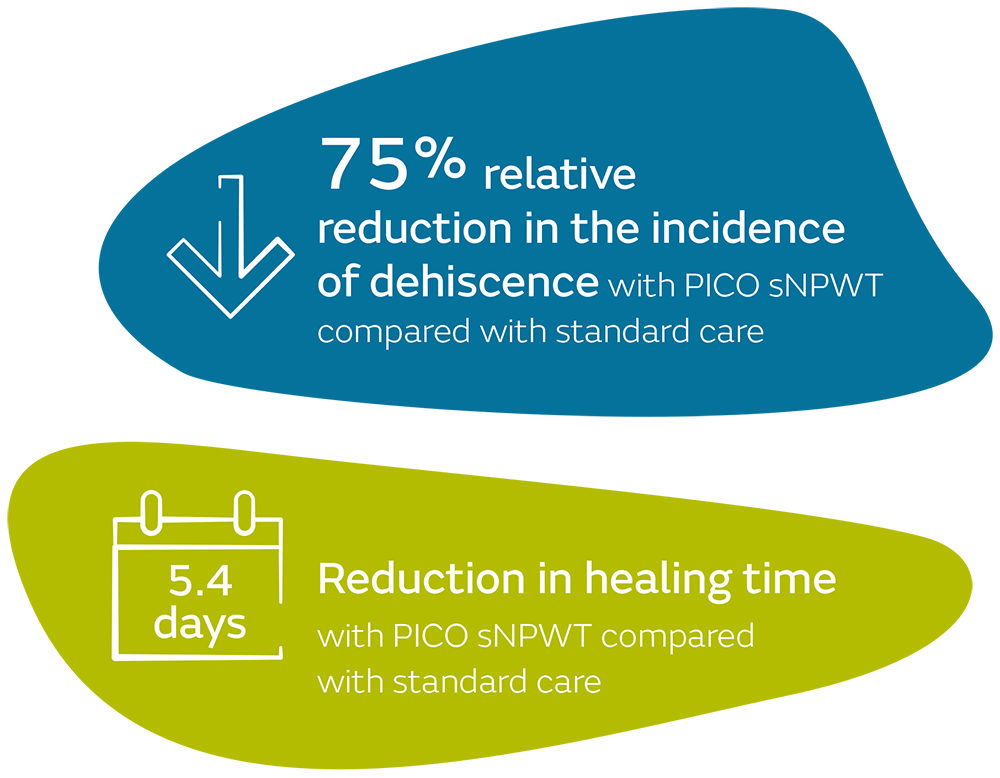
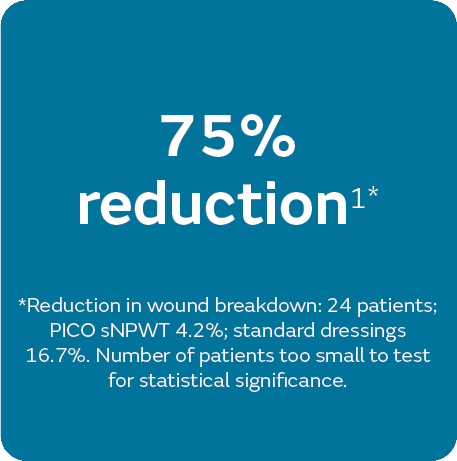
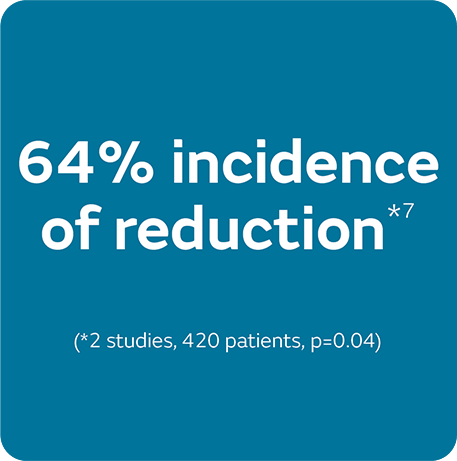
PICO sNPWT helped to reduce the incidence of dehiscence and decrease the time to heal incision wounds following complex oncoplastic breast surgery compared with standard care.6
*Compared to standard of care
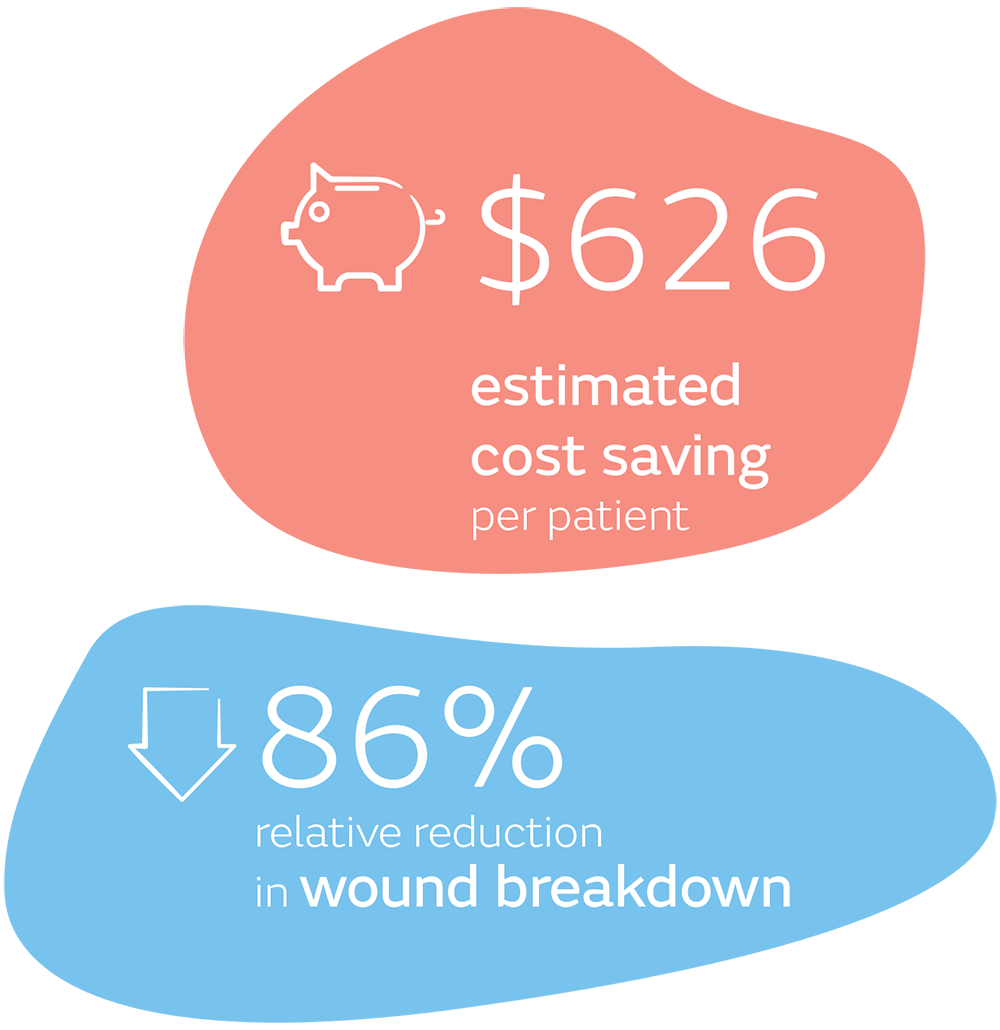
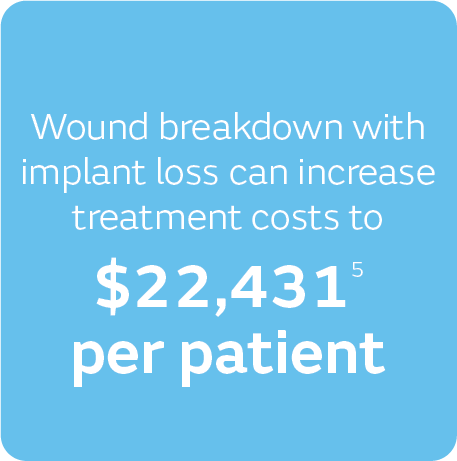
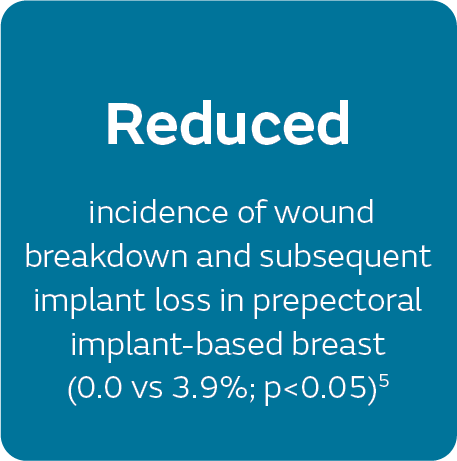
Use of PICO sNPWT helped to significantly reduce wound breakdown, which resulted in fewer implant losses, compared with standard dressings and was estimated to provide cost savings.5
- Bray F, Ferlay J, Soerjomataram I, Siegel RL, Torre LA, Jemal A. Global cancer statistics 2018: GLOBOCAN estimates of incidence and mortality worldwide for 36 cancers in 185 countries. CA: a cancer journal for clinicians. 2018 Nov;68(6):394-424.
- Ng SK, Hare RM, Kuang RJ, Smith KM, Brown BJ, Hunter-Smith DJ. Breast reconstruction post mastectomy: patient satisfaction and decision making. Annals of plastic surgery. 2016 Jun 1;76(6):640-4.
- Olsen MA, Chu-Ongsakul S, Brandt KE, Dietz JR, Mayfield J, Fraser VJ. Hospital-associated costs due to surgical site infection after breast surgery. Archives of Surgery. 2008 Jan 1;143(1):53-60.
- The World Health Organisation (2016) Global Guidelines for the Prevention of Surgical Site Infection. [online] Available from: https://apps.who.int/iris/bitstream/handle/10665/250680/9789241549882-eng.pdf?sequence=8 Last Accessed November 2019
- Irwin GW, Boundouki G, Fakim B, et al. Negative Pressure Wound Therapy reduces wound breakdown and implant loss in prepectoral breast reconstruction. Plast Reconstr Surg Glob Open. 2020;8(e2667).
- Holt R and Murphy J. PICO incision closure in oncoplastic breast surgery: a case series. Br J Hosp Med 2015;76(4):217-2232.
- Saunders C, Nherera LM, Horner A, Trueman P. BJS Open. 2021;5(1):1–8. Saunders C, Nherera LM, Horner A, Trueman P. BJS Open. 2021;5(1):1–8.
- R. G, R. D, J. S, et al. The effects of a single use canister-free Negative Pressure Wound Therapy (NPWT) System* on the prevention of postsurgical wound complications in patients undergoing bilateral breast reduction surgery. Paper presented at: The British Association of Aesthetic Plastic Surgeons (BAAP’s) 30th Annual Scientific Meeting; 2014; London
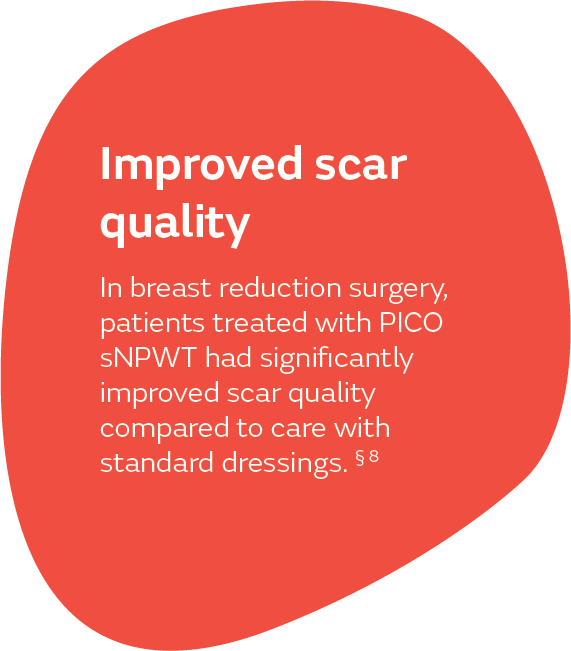
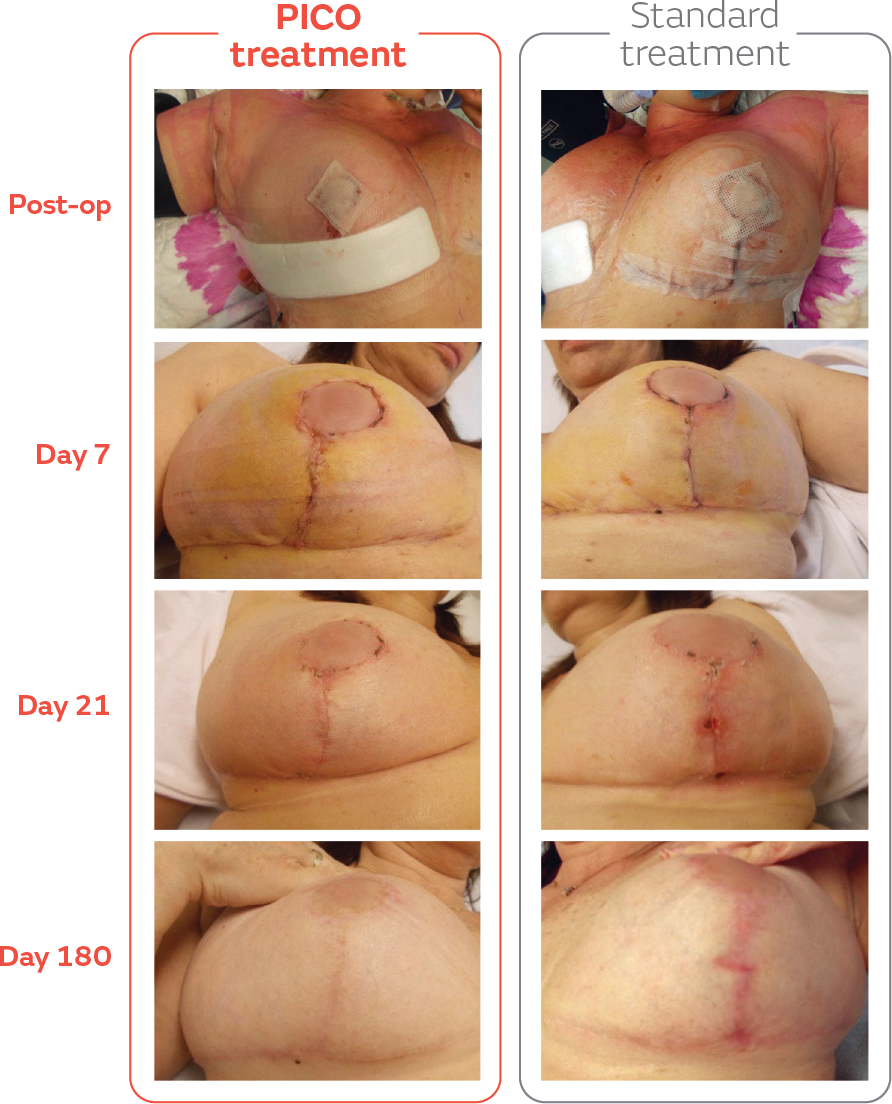
§Significantly better scar quality at 42 days and 90 days assessment; p<0.001